
Individual Psychotherapy with
Liesel Greyling
Integrative Psychotherapist
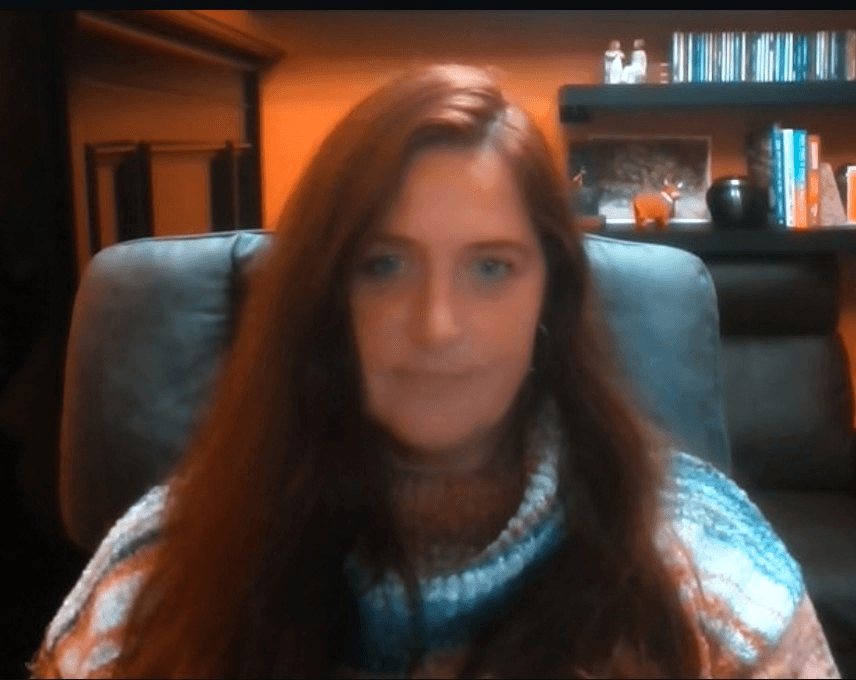
My Therapeutic Philosophy
As an integrative Psychotherapist, I am trained across the four foundational pillars of psychotherapy: Humanistic, Psychodynamic, Cognitive-Behavioural (CBT), and Systemic. As such, I do not have a standard ‘one hat-fits-all’ approach. Instead your therapy will be tailored collaboratively to address your unique challenges that bring you here, and the style of therapy that best suits you. I do, however, hold a number of core assumptions which inform my therapeutic practice as a whole:
You Are One of a Kind
A unique constellation of a lifetime of lived moments and experiences, biological predispositions, and social and cultural influences, making your attitudes, values, perspectives, and belief system your very own. Gaining an understanding of you as a person and trying to learn your meaning making is a fundamental task for me throughout our therapeutic journey together.
You Are the Expert of Your Own Life
Subsequently, I believe that it is imperative for me to be transparent throughout the therapy, offering you my understanding of what is going on, so that you can evaluate this and explore the degree to which you see this as fitting with yourself and your experiences.
All Behaviour Has a Reason
Whilst we might not always understand ourselves, behaviour comes from somewhere understandable. Through collaborative exploration, we can gain insight into why you might sometimes behave the way you do, and look to see how we can recognise and change this behaviour.
Emotions Are Our Primary Language
There to help us understand how we are experiencing something and to be able to communicate this to others to have our needs expressed and addressed. They are neither right nor wrong, they just ‘are’. To me, this then means that your emotions are valid, valuable, and welcome, if not essential, during your therapy journey.
People Strive to Actualise
They look to live their lives to their fullest potential. I trust in your drive for a better life, a better experience, and believe that you can absolutely get there.
Accessing Help is a Strength, Not a Weakness
We all need help sometimes when we get stuck in a situation, or in our thoughts, or in our feelings. Knowing when to ask for help is a sign of great strength. Knowing where to find that help shows wisdom. Accessing the right help at the right time is a choice that shows great courage and hope for change.
Mental Health & Mood Challenges
- Anxiety (including generalised anxiety, panic attacks, and social anxiety)
- Depression & Low Mood
Relationships & Attachment
- Relationship & Marital Conflict
- Attachment Issues (anxious, avoidant, or insecure patterns)
- Divorce, Separation, & Relationship Breakdowns
- Family Dynamics & Estrangement
- Co-dependency & Boundary Setting
Trauma & Stress Response
- Post-Traumatic Stress Disorder (PTSD)
- Complex Trauma (C-PTSD)
- Generalised Stress & Burnout
- Intergenerational or Systemic Trauma
- Domestic Abuse & Coercive Control Recovery
Identity, Self, & Personal Growth
- Low Self-Esteem & Self-Worth
- Imposter Syndrome & Perfectionism
- Identity Exploration
- LGBTQIA+ Identity & Gender Affirming Support
- Life Transitions & Change
Neurodivergence & Cognitive Differences
- ADHD
- Autistic Spectrum
- AuDHD
Loss, Grief, & Life Adjustments
- Bereavement & Complex Grief
- Anticipatory Grief (supporting those with terminally ill loved ones)
- Ambiguous Loss (loss without closure, such as a missing person or dementia)
- Infertility, Miscarriage, & Perinatal Loss
Specific Psychotherapy Paradigms and Approaches I Draw on:
Humanistic & Relational Therapies (Empathy and Growth-Oriented):
Person-Centred Therapy (Rogerian):
A non-directive approach relying on the therapist’s empathy, warmth, and unconditional positive regard to help clients reach their full potential.
Existential Therapy:
Explores broad human conditions like meaning, freedom, isolation, mortality, and personal responsibility.
Psychodynamic & Psychoanalytic Therapies (Insight and Past-Oriented):
Psychodynamic Therapy:
Explores how unconscious patterns, childhood experiences, and early relationships shape current feelings, choices, and behaviours.
Attachment-Based Therapy:
Examines the nature of a client’s early childhood bonds to understand and work on current relationship patterns and anxieties.
Systemic Therapies (Holistic and Context-Oriented):
Systemic / Family Therapy:
Looks at the client within the context of their relationships, family units, and wider social networks rather than treating the individual in isolation.
Solution-Focused Brief Therapy (SFBT):
A goal-oriented approach focusing on future solutions and immediate strengths rather than past problems or diagnoses.
Cognitive & Behavioural Therapies (Action and Thought-Oriented):
CBT (Cognitive Behavioural Therapy):
Focuses on identifying and changing unhelpful thought patterns and behaviours to influence emotional responses.
Specific Branches of Psychology Informing My Work:
Developmental Psychology:
This is the science of how humans grow, change, and adapt across a lifespan.
Social Psychology:
This is the study of how people’s thoughts, feelings, and behaviours are influenced by the presence and expectations of others.
Abnormal Psychology:
This is the scientific study of unusual patterns of behaviours, emotion, and thought, forming the basis for understanding clinical conditions.
Trauma Psychology:
This is the scientific study of how the mind and nervous system respond to overwhelming, threatening, or deeply distressing events.
Personality Psychology:
This is the study of individual differences, personality structures, and the unique psychological blueprints that make you who you are.
Victimology:
This is the psychological and sociological study of the experience of victimization, including the emotional, social, and relational aftermath of crime, abuse, or systemic injustice.
Multicultural Psychology:
This is the study of how culture, race, ethnicity, and societal identity shape human psychology and mental health.
Qualifications:
- MSc Integrative Psychotherapy, Dublin City University, Dublin, Ireland
- MSc Applied Forensic Psychology, University of Leicester, Leicester, UK
- BA (Hons) – Psychology, University of South Africa Pretoria, ZA
- BA – Psychology, University of South Africa, Pretoria, ZA
Specialist Training:
- Certified Autism Spectrum Disorder Clinical Specialist (ASDCS)
- Narcissistic Relationships, Emotional Abuse & Gaslighting
- ADHD Certification (Advanced Strategies)
- Certified Somatic Therapy for Complex Trauma
- Neurodiversity In Women
- Core Supervision Course
- Therapeutic Supervision Course
- Personality Dimensions Level 1 Training (Train the Trainer)
- NLP for Team leaders and Managers
- Mental Toughness Development
- Mental Toughness License User Training
- Critical Incident Stress Debriefing
- Grief Counselling Course
- HIV / AIDS Pre & Post-Test Counselling
- Trauma Debriefing Course
Format & Platform:
All sessions are conducted online via a secure, GDPR-compliant Zoom platform. You will receive a unique access link prior to each scheduled appointment.
Session Duration:
The standard therapeutic hour is 60 minutes long.
Session Frequency:
For new clients, weekly sessions are advised for at least 6 consecutive weeks (where possible), to ensure that there is sufficient time between sessions for processing but not too big of a gap to interrupt the therapeutic process. If you are thinking of having less sessions than this, please use the contact us form before we get started to discuss this and see if it could foreseeably be viable.
Ensuring a Safe Therapeutic Environment:
It is important for both of us to access the session from a private, quiet space within the United Kingdom. To maintain confidentiality, you are requested not attend sessions from public spaces. For your safety, you are also requested not to access therapy while driving.
Technical Disruptions:
In the unlikely event that our connection drops, we will first attempt to reconnect via the platform. Should the platform fail completely, I will call your mobile number to mutually decide if and how to complete the session or to reschedule.
Session Fees:
The fee for individual psychotherapy is dependent on the session frequency and duration:
60 min Individual Session
Recommended for:
- New Clients
- Complex Trauma Work
60 min Individual Session
Minimum requirement for:
- New Clients
- Complex Trauma Work
- Clients tapering down weekly therapy
60 min Individual Session
Once a month or less for:
- Clients talking through a very specific and confined challenge
- Clients tapering down Bi-Monthly sessions
- Clients seeking a ‘maintenance’ session following longer-term work
Ad Hoc
If a session requires additional time of up to 15 minutes either because:
- The topic in session requires more time
- The additional time is requested and pre-booked by the client
Payment Terms:
We will send through an invoice at the time of the booking. To secure your booking, payments should be made via bank transfer at the time of the booking or at least 48 hours before the scheduled session time. Sessions will not be considered to be confirmed until the payment is received, and without a payment reflecting 48 hours before the scheduled session, the slot may be given to another client at this time.
Cancellation Policy:
BSpoke Therapy Practice operates a strict 24-hour cancellation policy. If you cancel or request to reschedule an appointment with less than 24 hours' notice, or if you miss a session entirely, the full session fee remains payable, as this slot cannot be made available to other clients.
Confidentiality & Legal Limits (UK Based Psychotherapy)
BSpoke Therapy Practice is registered in the UK. As such, you will be accessing UK based Psychotherapy, meaning that the ethical and professional framework that informs my work is the British Association for Counselling and Psychotherapy (BACP) and is governed by UK law. You can access and review the BACP ethical and professional framework by following this link here: BACP Ethical Framework. From within these frameworks, your privacy is fundamental. All information shared within our sessions is strictly confidential. However, limitations to confidentiality do exist in terms of the following exceptional circumstances:
Risk of Harm:
I have a duty of care to yourself and others. Therefore, if I assess that there is a severe, imminent risk of serious harm to yourself or to another identifiable person, I will need to breech confidentiality.
Legal Mandates:
If I am legally compelled to disclose information, such as by a court order or under UK legislation concerning terrorism, drug trafficking, or money laundering. Confidentiality will need to be breeched.
Safeguarding:
If a disclosure is made regarding the ongoing abuse or neglect of a child or a vulnerable adult, I am unable to keep this in confidence.
Professional Supervision:
In line with my BACP professional and ethical standards, I regularly discuss my client work anonymously with a qualified Clinical Supervisor. Should your case be discussed, your identity is never revealed during Supervision sessions.
Data Protection & GDPR Compliance
Data Controller:
I operate as the Data Controller for your personal information. Therefore, I am personally registered with the Information Commissioner's Office (ICO).
Record Keeping:
I keep brief, anonymised client notes in accordance with UK law and ethical frameworks. These are stored securely and kept for 3 years after therapy ends, after which they are permanently destroyed.
Communication & Crisis Support
Between Session Contact:
Clients can contact me for administrative purposes (e.g., booking or altering appointments). Please note that I am not able to provide therapeutic support or crisis management via messaging channels. Phone details are reserved for us communicating in the event of a technical issue or a short-notice unavailability at the time of a session.
Crisis Management:
Unfortunately, I am not able to provide an emergency crisis service. If you experience an acute mental health crisis or require immediate medical attention between sessions, please contact:
- Your local NHS GP surgery.
- The NHS 111 service (or 999 in a life-threatening emergency).
- The Samaritans by calling 116 123.
Professional Standards, Ending Therapy & Consent
Ethical Adherence:
I am a registered member of the British Association for Counselling and Psychotherapy (BACP) (bacp.co.uk) and abide by their Ethical Framework for Good Practice.
Complaints:
If you have any concerns regarding our work together, please discuss them with me first. If the matter cannot be resolved, you can file a formal complaint directly with my professional body.
Planned Ending:
You have the right to end therapy at any time. To ensure a safe and psychologically grounded ending, I strongly recommend giving at least one week's notice so we can hold a dedicated closing session.
Legal Proceedings, Court Attendance, and Release of Records
Production of Notes and Records:
In accordance with UK data protection laws, therapy notes will not be disclosed to any third party without your explicit written consent, unless I am legally compelled to do so by a formal Court Order or Production Order issued by a judge.
Witness Summons and Court Appearance:
I do not provide legal testimony, custody evaluations, or expert opinions for court proceedings. If I am legally served with a Witness Summons requiring me to attend court or a tribunal regarding our therapeutic work, my role is strictly restricted to that of a "witness of fact" (confirming dates of attendance and factual session occurrences).
Legal Fees and Costs:
Because legal proceedings compromise the therapeutic framework and require significant administrative time, you (the client) agree to reimburse all professional time associated with any legal requests originating from your case. This includes time spent reviewing records, writing summaries, consulting legal counsel, and traveling to or waiting at court. These hours will be billed at a rate of £75 per hour, which is not covered by standard therapeutic fees or health insurance.

Take the Next Step
Choose the kind of support you are looking for, and your therapist will be in touch to arrange your first session.